
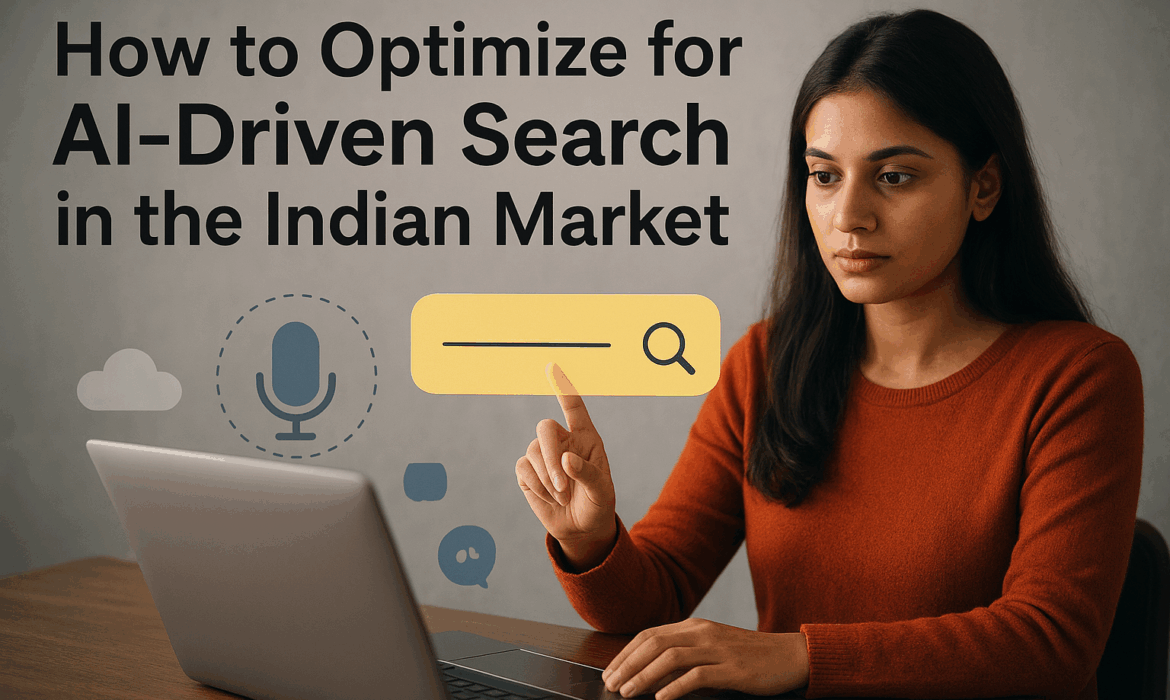
Generative Engine Optimization (GEO): How to Optimize for AI-Driven Search in the Indian Market
Remember the time when SEO meant ranking on Google’s top 10 blue links? In 2024 – 25, users are increasingly skipping clicks. They are getting more prone to ask ChatGPT, Gemini or perplexity and get the direct answers inside the AI generated summaries. The shift is birthing a new discipline in digital marketing. It is Generative engine optimization – the craft of making your brand show up when AI answers the queries for the user.
Why does GEO specially matter in the Indian market?
Because in today’s time India’s search behavior has shifted heavily in mobile first, voice first and regional multilanguage searches. A huge portion of people don’t type to look for the queries. They talk to AI assistants in various vernaculars like Hindi, Bangla, Tamil, Telegu, Marathi and most often, in a mixed language. Generative AI assistants are rapidly becoming the default search layer for these kind of audiences. So, if your content is invisible to the AI surfaces, then you’re not just losing on the clicks, you are basically losing on a lion share of the audience. Which means you are directly losing the mindshare at the exact point of decision of the customer.
How do you optimize for AI generated answers?
GEO is about making your content cleanest, easiest and very importantly, the most trustworthy thing for AI models to pick up and quote before they can search and mention any other sources. And here you may find yourself asking what can you do to make it a game changer for your brand in the Indian market?
Write for questions and not just keywords
The shift of writing content without making it keyword heavy has seen a rise from the last couple of years. The AI answers are question answer structured. So in today’s time when somebody is building content it should be around the intent like ‘how to…’, ‘best way to…’, ‘Is it worth…’ with skimmable clean logic.
Structure like an explainer and not like a typical brochure
Generative engines love clarity. And when you feed them with proper evidence and structure, such as with bullets, short claims which are backed by trusted sources, numbered lists and clearly labeled section, you raise the bar of the AI to be quoted in the generative search segments.
Make content machine readable
This is the technical part, but needs to be taken care of for a brand first content. Add schema markup, glossaries, FAQs and definition blocks which will help the AI models fit and summarise you correctly.
Localize for Indian reality
Using Indian vernacular languages is becoming very popular. So when you are creating your content for the Indian market, make sure to include Indian use cases such as GST file link for freelancers or TDS for NRIs or EV charging in Bangalore. And when you have voice style headlines which can mirror how Indian audiences actually ask, it will be easier for the platform to quote your summaries smarter.
Build credible credibility signals
AI models overweight brands with expert tone citations and with the consistency across various platforms. It is high time that brands understand that they need to publish the point of views and not fluff. One authoritative piece will beat five generic blogs.
Isn’t this just SEO with new makeup?
Well, this could be a genuine question for anyone who is into digital marketing, but the answer is no. Classic SEO fights for clicks, GEO fights for being included in AI summaries. The new “zero-click home screen of the mind” of today’s time is what is dominating the virtual platforms. In a market like India, where people are increasingly being advised not to open links, GEO is certainly making a difference. It is about being remembered and being never seen.
Want to make your brand GEO ready?
If you want your brand to show up where what the Indian audience is actually searching and not just thrive on what was yesterday’s metrics, this is the moment to make your move. SymbolX is helping him to stay ahead of the shift by creating a content that is understood by machines but at the core is built for the humans.
Explore our services and start your GEO ready content stack at SymbolX
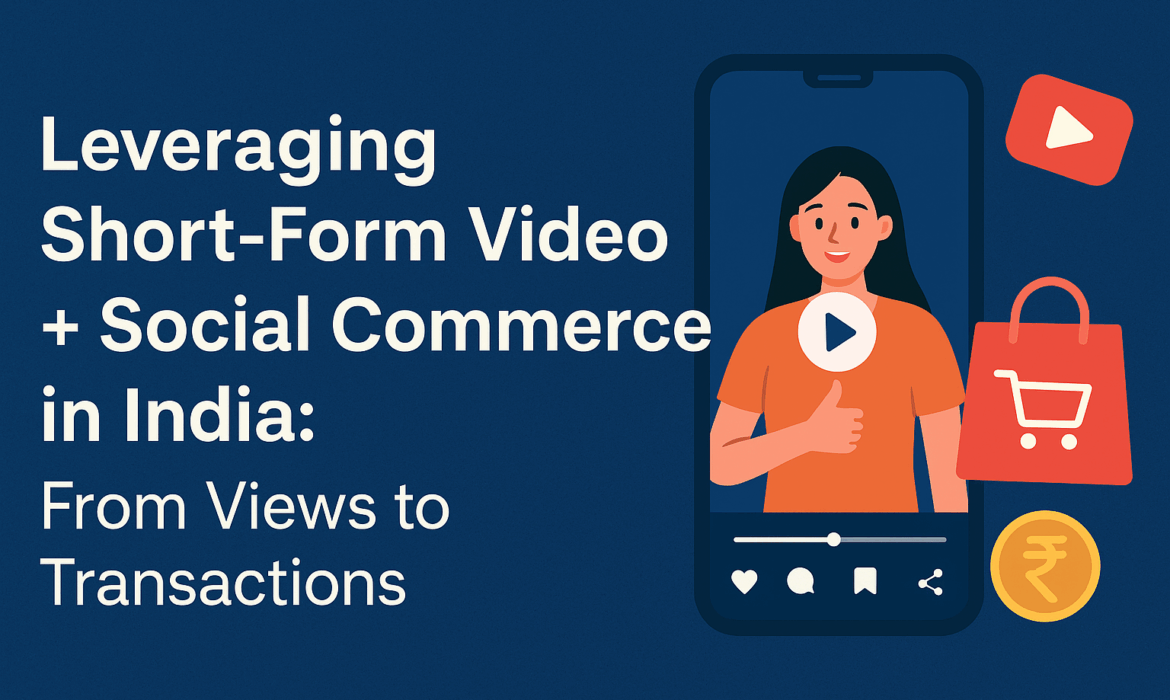
Leveraging Short-Form Video + Social Commerce in India: From Views to Transactions
If you think that the short form videos are only good for views and some vanity metrics, frankly, you are missing out on the real money in today’s time. India’s social media users don’t just watch anymore. But they compare, click, cart and eventually make it a decision point without leaving the app. The jump from scroll to sale is now getting shorter and as a digital marketing expert, one needs to leverage this point?
With Instagram reels, YouTube shorts, Pinterest pin product, social commerce is shifting more to a frictionless buying tunnel from rather being just an entertainment. And the sweet spot lies where you can club the short form video with the shop integrations meet.
Why short from video works so well when it comes to selling in India?
Indians spend more than two hours daily on short video apps. So, basically you don’t chase attention, you build your content inside it. The attention is already over there.
The concept of impulse psychology is growing. Whenever one sees the fast content, it equals to faster desire and therefore even faster checkout. Influencers, creators and even the nano sellers can now act as pure recommendation engines, so there is no trust gap in this entire matrix. What is seen in reel becomes a social proof for buying.
The concept of one tap fulfillment is also rising, which means there are tagged products in platform checkout, COD integrated cards which can remove any leak from the buying funnel.
What kind of short form video actually converts?
What works is not cinematic ad films, but it is the content that feels native to the feed. It has to be quick, real and of course, personal.
- Hands on demos work brilliantly because consumers want to see usage, texture and want to understand the real time results and not just go with the packaging.
- Before and after clips and proof style videos help to build trust without requiring any big words or promises.
- There are micro tests such as home hacks, quick recipes, mix and match, outfit trials, and/or the product comparisons which can help to nudge the curiosity into actual buying intent. The creator POV videos such as ‘Here’s how I use this for my new Diwali look’ can feel like peer recommendations instead of a pushy brand sell.
- And of course the offer and good clips where there are price drops or time sensitive deals or festive special offers can shift a passive viewer into an active buyer.
In short, you have to talk like a friend on WhatsApp and not like a boardroom brand.
How to move from views to cards to orders?
- Do not wait till the caption to sell. The call out should be as simple as buying tag or tap the product inside the first 3 seconds. Attention span is the biggest currency here.
- Make the comment section like a sales desk. You can have some preempted FAQs like the sizes, COD options, return, shipping time, dupes etc. One of the best ideas is to reply with pinned comments for the responses that you think could be helpful for many.
- Collapse the funnel. Use in app shop. Do not go for external websites wherever it is possible. Sometimes this extra click can kill intent.
- Use scarcity ethically. Time bound deals might be found in the biggest shopping platforms all through the year. However, if you can use it more wisely, such as 100 units only or early bird Christmas offer, it can help to drive a more decisive behavior from your consumers.
- Retarget watches. Custom audiences of reel viewers can help to convert cheaper than cold traffic.
The shift to shop where you scroll is here and you should not miss it out
The concept that we mentioned here is not a future play. The D2C brands, the homegrown sellers, even the MSMEs are closing sales daily with the reels in the shorts without having a website of their own. The short form video is no longer a brand awareness playground. In India, it’s travelling storefront that packs attention, trust and where the checkout is possible with just a thumb click.
The brands which are learning to sell inside the scroll and not after it will be owning the next wave of e-commerce. So, if you want to design short form video funnels which can actually help you convert, reach us with a hi and we can help you map one for your category and plan your next pathway.
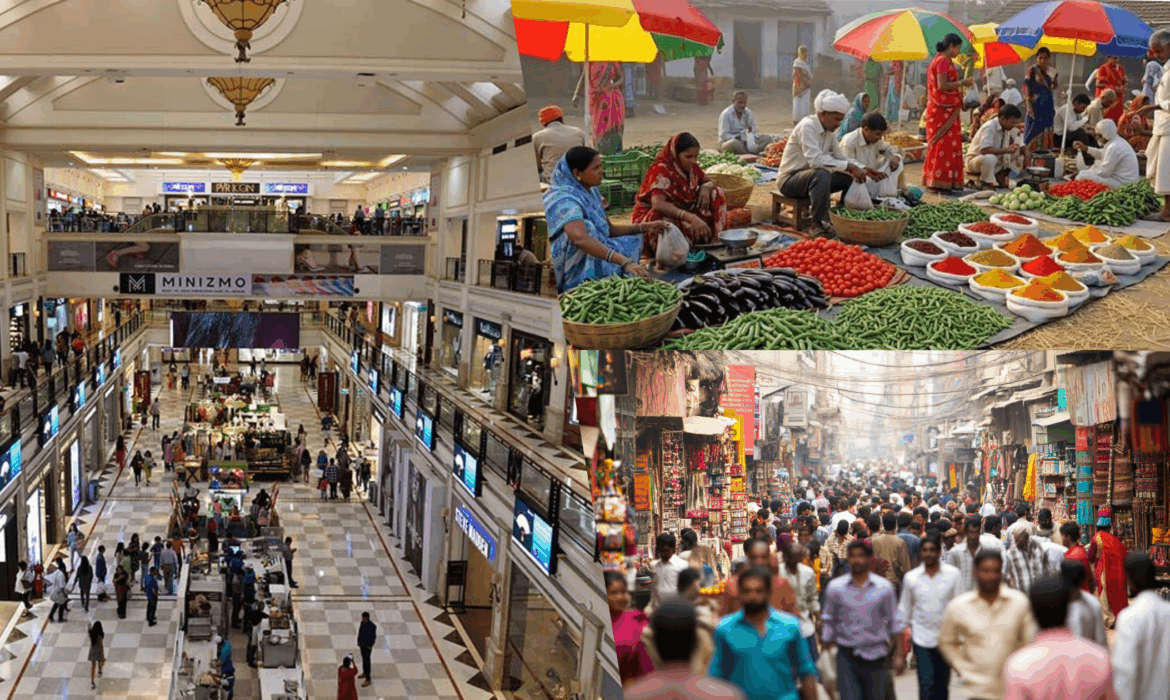
Advanced Audience Segmentation for Indian Brands: From Micro-Segments to Predictive Modeling
Indian consumers do not behave in a linear way. The same customer who buys premium coffee will bargain at groceries, will choose some thrift affordable fashion, but might spend lavishly on travel. This layered behavior is exactly why Indian brands can no longer rely on the broad levels which speaks ‘urban’, ‘millennial’, ‘Tire 1 users’ etc.
The real edge today lies in advanced segmentation, which means there should be a shift in branding and product approach. This means it is about moving the product or brand from wide generic segments to micro segments. Eventually there should be predictive models that can tell you who will act next or what.
From broad segments to real micro segments
Traditional segmentation stops at gender, age and income. This made sense even a decade ago, but is too blunt for today’s time. Modern Indian brands break those big buckets into behaviour defined, smaller audience. For example, simply targeting ‘urban mothers’ will not help but a micro segment which speaks ‘mothers of 0-2 years old in Mumbai actively searching for toxin free baby products’ is a better and accepted search intent. Or young working professionals is a broad segment, but a sharper one in today’s time will be ‘EMI calculator for IT employees from 22 to 27 living on rent’.
Notice how these micro segments are not defined by who people are, but what they’re doing and what they’re about to decide. So, when the communication matches that stage, the ROI multiplies, not because the ad is fancy, but because the targeting is more precise, intelligent and personal.
Behaviour plus intent is greater than demographic alone
The most powerful segmentation for Indian brands blends identity with action. You have to look through the website behavior, offline store visits, app events, repeat purchases, search context, scroll history, etc. Two women aged 30 in the same city can be two entirely different customers if one is watching postpartum fitness and the other is looking for a real estate in Dubai. If your messaging does not acknowledge the difference, you’re burning budget.
The leap ahead
Predictive modeling is the answer. So, once brands have enough behavioral data, they will move to predictive modelling, which is forecasting what each user is likely to do next. This will help in prosperity to buy, churn the risk, increased cross-sell potential. Instead of treating all leads equally, this predictive model will help the brands to invest where there is the highest probability.
Why it matters now?
India’s digital audience is growing, but their attention and wallet are not infinite, neither uniform. The brands that win are not the loudest, but the ones which are most specific. While the older question was ‘Who is my customer’, for 2025 and beyond, your brand should respond to ‘Which micro-segment is ready right now?’
Find out how to make your brand ready across all segments with SymbolX